FrontierAid Integrated Development Initiative (FAIDI) is a Somali, female-led NGO established in 2024 to support communities facing the combined impacts of climate shocks, conflict, displacement, and poverty. FAIDI was founded by young, passionate Somali professionals—predominantly women—who believe that real change must be locally led and people-centered.
We work with communities, not for them. Our role is to listen, support, and walk alongside families as they rebuild livelihoods, strengthen social bonds, and create safer futures.
FAIDI uses a people-centered, conflict-sensitive, and locally driven approach. Communities are involved at every stage—from identifying priorities to implementing and monitoring activities.
Resilient, peaceful, and self-reliant communities in semi-arid regions.
To strengthen the resilience and wellbeing of vulnerable communities through compassionate humanitarian assistance, sustainable livelihoods, climate adaptation, and inclusive peacebuilding.

Every person deserves respect, safety, and the opportunity to thrive.
Communities are partners with knowledge and solutions, not passive recipients of aid.
Women’s leadership and participation are essential for meaningful and lasting change.
FAIDI is accountable to the people it serves and to its partners.
All actions are designed to reduce harm and strengthen social cohesion.
Utilizing cash transfers to empower economic development and household resilience.
FAIDI believes that meaningful change happens when people are listened to, respected, and actively involved in shaping solutions. The organization works through a people-centered, conflict-sensitive, and locally driven approach that
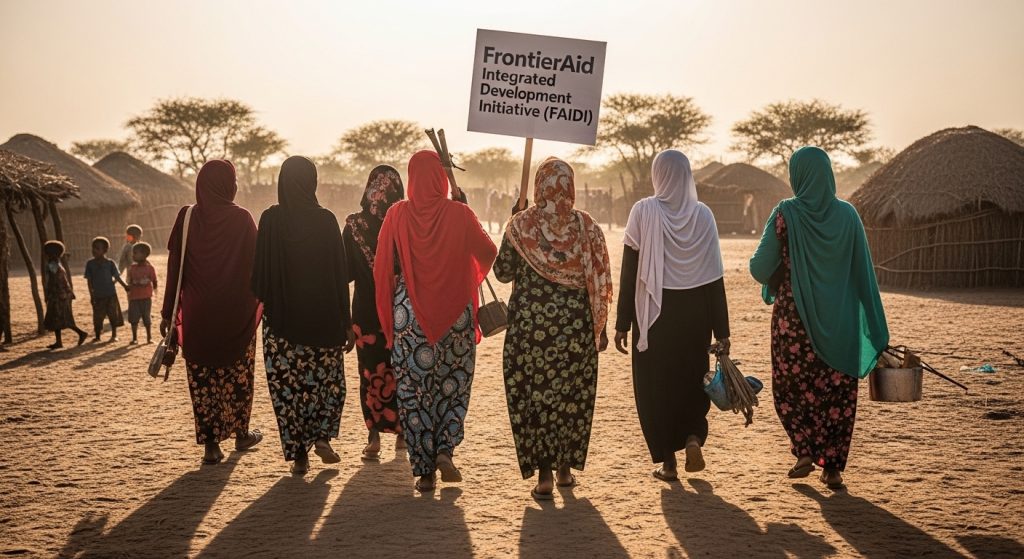
Deliver timely and inclusive humanitarian assistance to communities affected by conflict, displacement, and climate shocks, prioritizing the most vulnerable.
Improve household food security and economic resilience through sustainable, climate-smart livelihood opportunities.
Expand equitable access to health, nutrition, education, water, and sanitation services for underserved populations.
Support communities to prepare for, adapt to, and recover from climate-related shocks and disasters.
Advance women’s leadership and prevent gender-based violence through community-based and survivor-centered approaches.
Promote peaceful coexistence, inclusive governance, and community dialogue, with strong participation of women and youth.